These services are the ones that can be invoked from the client app when the user is verified. These services allow the smartphone user to be securely identified so that the client can offer specific services to the user.
This method of identification allows the user to be identified in two different environments:
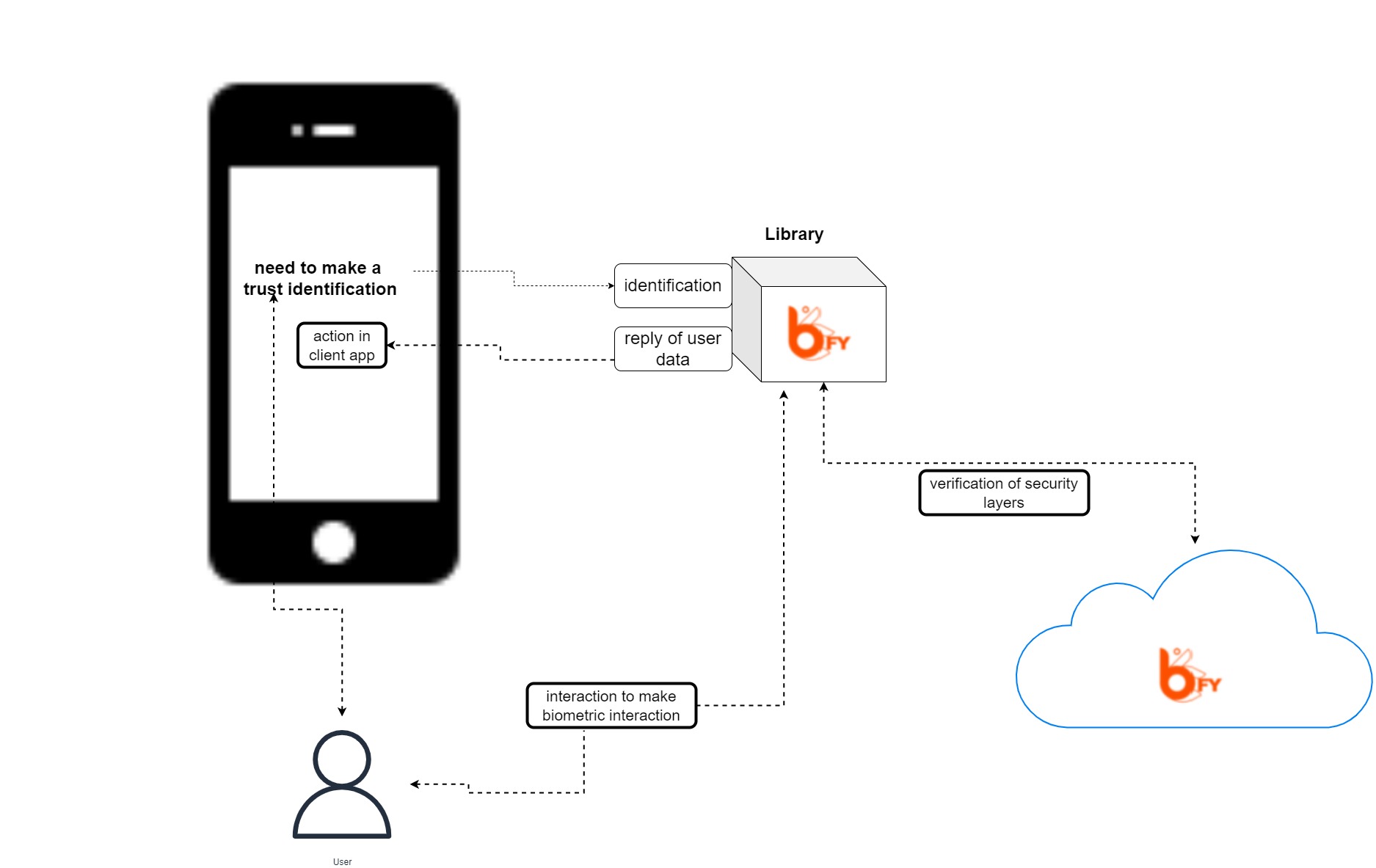
- On the device itself - When the user is going to use the app and the client needs it, it can invoke the library to prompt and verify the user who is using the smartphone. The client app can consider that it is the legitimate user and load the corresponding services.
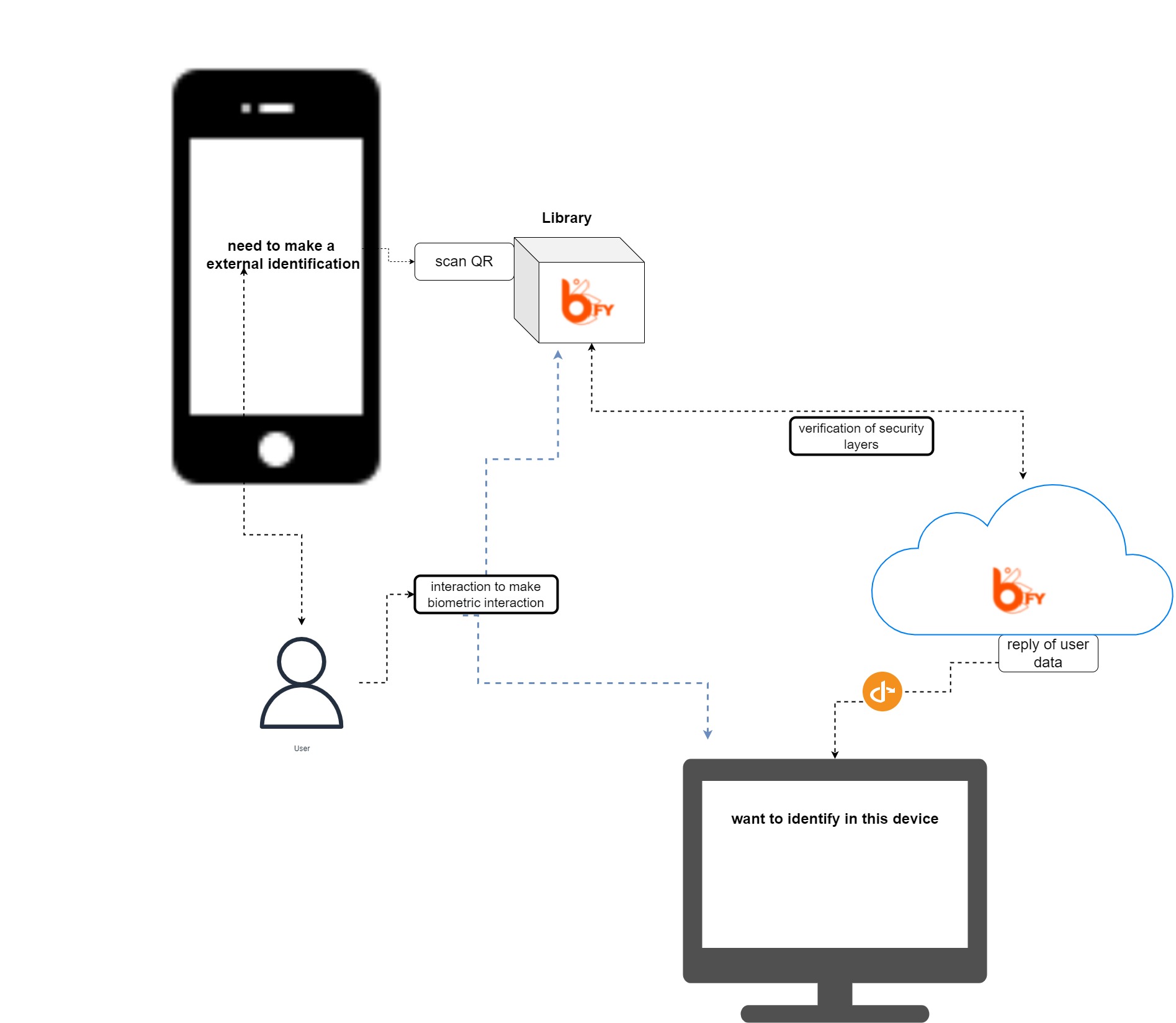
- On a device external to the smartphone - When the client has services to offer on web browsers, Smart TV, totems, etc. the user can use the client's app to identify themselves. In this way, the system on the external device will receive the data of the user who has identified themselves, so that the client can offer specific services to that user.
As an example, the opening of an app by the user is shown. If, for security reasons, the app needs to verify who is trying to open it, by calling the B-FY library, it will receive the data of the user who is opening it (after biometric verification), to allow access to the content or not. Another example is that a customer's app does not need an identification at the opening, as it only needs it at critical points, such as validation of purchases etc.
In this example, the client would call the library when the user is trying to do something that requires identification, after receiving the data from the user who is using the smartphone, the application can allow or disallow the action. After the identification call, the user has to identify himself biometrically and perform some verification processes, but this is something that the library does autonomously, so the client app just has to wait for the user identification process to finish. The library performs the necessary interactions with the client.
The result of these services will always be the user's data so that the client can carry out the actions required with the user's data. This data will always be in email and telephone format, and these can be used to identify the user in the client's own systems (loading their associated services).
The user's email and phone data are returned to the client app as a result of the request for services, or via Open ID to the client devices external to the smartphone that has requested the identification.
In all services, the client only has to invoke the library, from here, B-FY performs all the necessary executions to identify the user, both the connections with the B-FY server and the biometric identification requests to the user.